



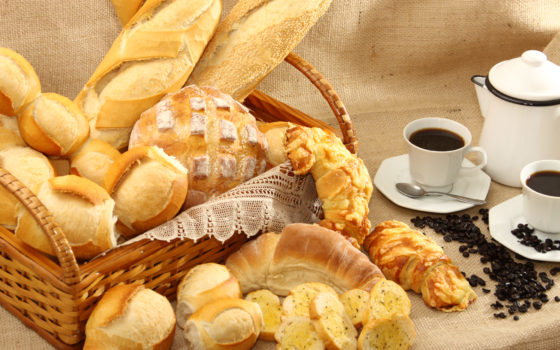
Bread is one of the most consumed and loved foods in the world, a symbol of nutrition, sharing, and tradition. But have you ever wondered about the origin of breadmaking?
How did humans learn to transform simple grains into one of the most important foods in history?
In this content, we will explore how breadmaking originated, evolved, and transformed over the millennia to become the modern bakeries we know today.
The origins of breadmaking in Antiquity
the origin of bakery dates back to approximately 8.000 BC, on the banks of the Tigris and Euphrates rivers, in ancient Mesopotamia, and also in the Indus River ValleyIt was there that the first civilizations began to grind grains in a rudimentary way and mix them with water to create simple doughs.
These doughs were left in the sun to ferment naturally and then baked on hot stones or covered with embers. The result was a flat, rustic bread, known today as flatbread, a type of bread that is still popular in several regions of the Middle East, such as Iraq, Iran, and India.
These early breads were made with oats, wheat, barley, and seeds like sesame., being an important source of energy for agricultural and nomadic peoples of the time.
The role of Egypt in the development of leavened bread.
It was in Ancient Egypt, around 4.000 BC...that bread underwent a true revolution. The Egyptians developed... more efficient stone mills and they began to perfect the fermentation process, which, according to historical records, occurred by chance.
A piece of dough, left out in the open air, was naturally contaminated by microorganisms present in the environment. This biological action gave rise to alcoholic fermentation, which later evolved into acidic fermentation, producing gas bubbles and causing the dough to rise.
This phenomenon was the turning point in the history of breadmaking, giving rise to leavened bread, which was lighter, softer, and tastier than previous flatbreads. Bread then became an essential element in the Egyptian diet and gained religious and cultural importance.
The advancement of breadmaking in Greece and Rome
Breadmaking spread rapidly throughout the Mediterranean, reaching Ancient Greece and later Rome.
The Greeks were responsible for transforming bread making into a true art. They created different types and shapes, varying ingredients and cooking techniques.
The Romans took breadmaking to another level: they founded the first public bakeries and made bread part of the daily diet of rich and poor alike. Historical documents show that... around the 1st century ADBack then, there were already bakeries that produced bread on a large scale, which was even distributed as payment to workers and soldiers.
The scientific revolution: Louis Pasteur and the discovery of yeast.
For centuries, fermentation was seen as a mystery. It was only in 1859 that Louis PasteurHe, the father of modern microbiology, revealed how baker's yeast actually worked.
Pasteur discovered that the microorganisms present in yeast fed on the starch in the flour and produced carbon dioxide (CO₂), responsible for expanding the gluten and making the dough rise.
This scientific discovery completely transformed the baking industry, bringing precision and control to the fermentation process.
The 20th century and the modernization of breadmaking.
At the beginning of the 20th century, breadmaking underwent a new phase of evolution. Gas ovens replaced wood-fired and brick ovens, making it possible... Greater temperature control, cooking uniformity, and productivity..
Mechanization and the use of standardized ingredients have made bread production more consistent and accessible. Over time, bread has gained countless variations: whole wheat bread, naturally fermented bread, bread enriched with grains, fiber, and even functional ingredients.
Today, breadmaking combines tradition and technology, uniting Science, flavor, and innovation, a reflection of the long journey that began more than 10 years ago.
The essential ingredients of baking
Despite evolutions and variations, the basic structure of bread has remained virtually the same since antiquity:
- Wheat flour: responsible for the structure and formation of gluten;
- Water: It activates the starch and proteins in the flour;
- will: It enhances the flavor and controls fermentation;
- Biological yeast: It makes the dough rise and gain a light texture.
Starting with these simple ingredients, modern baking creates endless combinations, from artisan breads to high-performance industrial products.
Conclusion: The origin of breadmaking and its importance today.
Understanding the origins of breadmaking is to appreciate one of the oldest expressions of human food culture. Bread has accompanied the evolution of civilizations, symbolizing nutrition, sharing, and innovation throughout the centuries.
Today, science and technology allow us to improve each step of this age-old process, from the selection of ingredients to microbiological control and quality standardization.
PMAN supports the baking industry with high-performance products, such as... sourdoughand specialized support, helping industries and bakeries keep this tradition alive, with increasingly healthy, tasty and innovative breads. Contact PMAN And get your questions answered by our experts!

