



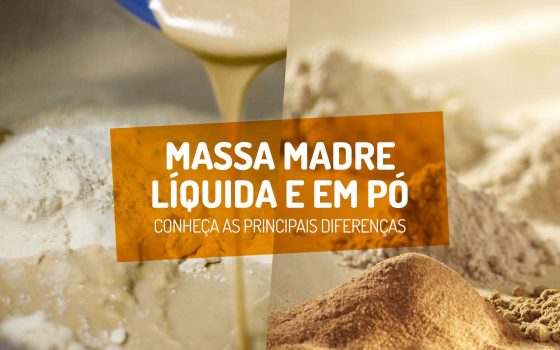
A liquid and powdered sourdough It is essential for those seeking to improve the flavor, texture, and shelf life of naturally fermented breads. Both versions offer important technological benefits, but present significant differences in use, dosage, and sensory impact. Understanding these characteristics helps in selecting the ideal sourdough starter for each type of breadmaking.
Comparison between powdered sourdough starter and liquid sourdough starter
Ready-made sourdough starters can be found in liquid, paste, and powder forms. Since the paste version is still not widely used in Brazil, the most common comparison is between... liquid sourdough e powdered sourdough starter.
Below, we present a practical guide considering flavor, texture, shelf life, formulation adjustments, and ease of use.
1. Impact on taste and aroma
Sourdough powder:
- Intensity varies depending on dose and raw material.
- It can bring toasted, malty, nutty, and aromatic notes.
Liquid sourdough starter:
- Intensity also varies depending on the dose and raw material.
- It delivers predominantly aromatic notes, without any toasty character.
2. Impact on shelf life
Sourdough powder:
- Contains lactic acid.
- It helps inhibit mold and enhances the action of sodium propionate.
Liquid sourdough starter:
- It contains lactic acid and acetic acid.
- It provides greater antimicrobial protection and further improves the performance of the propionate.
3. Impact on the texture of the dough and crumb
Sourdough powder:
- Ensures good core resilience.
Liquid sourdough starter:
- It provides excellent resilience, with a more elastic structure.
4. Impact on color
Both can have an imperceptible to moderate impact, depending on the dosage and raw material used.
5. Typical dosage (flour based)
- Sourdough powder: 1% a 6%
- Liquid sourdough starter: 5% a 20%
6. Adjustments to the formulation
- Sourdough powder: No further adjustments are required.
- Liquid sourdough starter: May require a reduction in water and salt.
7. Ease of use
- Sourdough powder: Extremely simple; added along with the dry ingredients.
- Liquid sourdough starter: Equally simple; applied alongside liquid ingredients and compatible with automatic dispensing systems.
8. Shelf life and storage
- Sourdough powder: 12 months, stored in a cool, dry place.
- Liquid sourdough starter: Store in a cool, dry place for 9 months; refrigerate after opening.
How to choose between liquid sourdough starter and powdered sourdough starter?
The decision depends on the desired characteristics of the final product and the bakery's production structure. Both deliver controlled natural fermentation and superior technological results, such as improved texture, extended shelf life, and a consistent sensory profile.
For those seeking practicality, powdered sourdough starter may be the best choice. Liquid sourdough starter, on the other hand, usually offers a more noticeable impact on resilience and shelf life, making it suitable for operations involving structured liquid systems.
Content based on technical studies of Dr. Elisa Lazzari Karkle.
Why rely on PMAN?
Both liquid sourdough as for powdered sourdough starter They are excellent tools for improving bread quality, optimizing processes, and ensuring sensory consistency.
Do you want to implement liquid or powdered sourdough starter with guaranteed results?
A PMAN It offers both versions with full technical support. Talk to our team of experts!

